Sure, I spent many semesters and countless hours learning and studying Koine Greek while in college and seminary. But what have I done with it since then? Truth be told, the thing I've done the most is to let my skills atrophy. Lately I have been wanting to regain those skills, but I wasn't sure of the best way to go about it. With extremely limited time at my disposal and many responsibilities to manage, I could use some advice. Luckily, I managed to get a copy of Keep Your Greek: Strategies for Busy People. (Thank you, Zondervan!) Author Con Campbell provides a number of quick and easy ways to keep up on and even get better at Greek* in only a few minutes each day. I appreciated that he specifically states in the introduction that this is not a formulaic, "10-step" program, nor is it a magic bullet, but rather a list of habits and/or exercises that he has found helpful over the years. Ultimately, this is a pragmatic book: It's about getting back into the Greek NT by taking one, two or three of the ideas Campbell espouses and incorporating them into your daily routine--or even springboarding off of his ideas and creating your own.
This book is an easy and quick read, full of good ideas and resources for Greek. As this book was originally a series of blog posts, Campbell includes the comments he received at the end of each chapter, which (surprisingly to me) added a fresh, new element of interacting with the material. As a bonus, he also takes a look at pros and cons of interlinears, software tools, and other resources commonly used by students. I share his dislike for interlinears and so did not learn much new here, but I did appreciate his comments about software tools, since that is one area I have never investigated using in my own study. Finally, I appreciated the last chapter, wherein Campbell articulates how he uses the techniques mentioned previously in his own personal study. It lends much credence to the author to know that and how he uses his own advice. The only thing I disliked about the book is that some of the tips and tricks mentioned, to my mind, seem like they would take a bit longer than advertised, at least initially.
Overall, this book came just at the right time for me, as one who is seeking to regain his Greek (and Hebrew) skills. Now comes the hard part: Putting it into practice. But I don't think Dr. Campbell or anyone else can help me with that!
*And, of course, the ideas presented apply equally to biblical Hebrew, as well.
Showing posts with label Book Review. Show all posts
Showing posts with label Book Review. Show all posts
Wednesday, March 16, 2011

Monday, February 28, 2011
Review of Hearing God
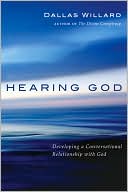
Dallas Willard is a professor of philosophy at USC, but he's also one of Christianity's premiere authors when it comes to spiritual formation. Yet somehow, I managed to read not a single of his books all throughout seminary (purely unintentionally). I finally picked up and read Hearing God in the context of preparing to teach an adult Sunday school course, using the book as a basis. The thesis of the work, in Willard's own words, is as follows: "Hearing God's word will never make sense except when it is set within a larger life of a certain kind" (p. 211, italics original). Accordingly, the author discusses 1) what God's word actually is (hint: it's not limited to just the Bible) and 2) what kind of life we must live to hear and rightly discern God's voice in our life (viz., an active life of faith that submits itself to God). These two themes are further broken down by the various chapters, of which Willard gives a basic framework in the preface (p. 13). I highly recommend referring back to this framework at the beginning of each chapter--things will make much more sense this way. Similarly, the book ends with "a formula for living with God's voice" that ties up the book's contents into a neat and tidy three-page bow. (Note: Even though he ends with a "formula," the book itself is in no way formulaic.)
I appreciated much about this book. Willard's manner of writing is clear and concise, not sacrificing anything intellectually, yet at the same conversational and easy-to-read. In addition, like a good speech, the book tells you what it's going to talk about, it talks about it, and then it tells you what it talked about . This layout makes understanding such a potentially nebulous concept much easier. Willard's theology is also well-informed, well within the evangelical framework, and, of course, biblically based. And as I sit here, I can honestly say that I can't find anything wrong with the book. There were so many good nuggets that the only problem I can see with this work is trying to narrow down the material for teaching it in class!
In sum, if you're looking for a solid, well-written book on understanding divine guidance, stop looking--just get Hearing God.
Friday, February 18, 2011
Book Review of Tom Jones by Henry Fielding
I first picked up Tom Jones in college. I only got a few hundred pages in when I lost interest and put the book down. A few months ago, however, I found a cheap copy at a used-book store and decided to try my luck again. This time, my experience was markedly different: I was hooked within a few pages. Fielding writes in a very engaging manner; it feels like one is listening to a close friend relate a personal story rather than reading a 250-year-old book. The characters are robust: The über-benevolent Squire Allworthy, the absolutely knuckleheaded Squire Western, the heroic, noble Tom Jones--who has got to be one of the unluckiest men ever in fiction-dom--and the lovely Sophia, who must suffer under her father's irrational love. The plot is superlative: Throughout the course of the book, I found myself thinking about the characters (and actually being concerned for their welfare!) in between reading sessions. I had to know what happened to them, and how everything was going to work out happily in the end. (Indeed, with about 40 pages left, I was starting to get very worried.) The love, sex, betrayal, and plain-old human nature of the plot is such that if one updated the scenery, it might be a book written to describe present-day events. Fielding complements his fine character creations with a sharp wit that is apparent on almost every page. I laughed out loud quite a few times throughout the book, and I got the distinct feeling that the author was winking at me almost non-stop. I can imagine that Mr. Fielding would be a riot in a pub with a few drinks under his belt!
In an era whose modus operandi is instant gratification, it can require extra discipline to make it through this lengthy work that at times uses some unfamiliar language. Nevertheless, reading Tom Jones is completely worth the effort, as you will enjoy a master storyteller at his best.
Wednesday, December 15, 2010
Review of Zondervan's New Commentary on Ephesians

Zondervan has just released a new commentary series on the New Testament, with four titles available: Matthew, Galatians, Ephesians, and James. When I had the chance to grab an early reviewer's copy of Ephesians, I jumped on it! After having spent the last few weeks perusing the commentary, I can say that overall, it is definitely a good addition to my personal library.
In the preface, author Clinton E. Arnold remarks that Ephesians is the book out of which he has most preached and taught over the years, and his love for this Pauline epistle comes across throughout this commentary. Arnold provides a detailed and robust introduction to the book that should leave the reader with no questions about the historical background of Ephesians. While this, of course, is standard fare for any commentary, his introduction is among the best and fullest I've read. In addition, Arnold provides a very nice section about the theology of the epistle at the end of the commentary, which means that the work provides not only detailed information about each verse of Ephesians, but it also steps back from the minutia and reviews key themes of the book at a broad level. This fact alone should be of much aid to anyone who uses this commentary for preaching or study. Regarding the actual, verse-by-verse commentary itself, I feel that Arnold has done a good job, although in this respect it is probably equally as good as WBC, BECNT, NIVAC, or any number of other commentary series. To be fair, Arnold does do the reader a service by providing the actual Greek text along with his translation and by providing paragraph diagrams, which include layman's descriptions of the various parts of Greek syntax that Paul is using. Arnold also frequently refers to Wallace and BDAG in the footnotes, which makes diving deeper into a word or phrase much easier for the intermediate-and-above student of Greek. In the end, however, one should not expect to find much new and ground-breaking material in the commentary section. Used in conjunction with several other commentaries on Ephesians, though, it will still be of great help.
I should issue one caveat: This commentary is definitely designed for someone with a working knowledge of biblical Greek. Although a Greek neophyte will be able to learn much from this commentary, a full interaction with the material requires that the reader understand the original Greek language, including syntax. Arnold uses many technical terms throughout that would probably serve to confuse non-Greek readers more than help them. That being said, if you have had Bible-college or seminary training, ZECNT Ephesians would be a valuable addition to your regularly referenced commentaries.
Saturday, December 4, 2010
Review of The Idea of the Holy by Rudolf Otto

I decided to read The Idea of the Holy by Rudolf Otto when I saw that it was on C.S. Lewis' top-ten list of books that influenced him, reasoning that if it was good enough for Lewis, it was probably worth my time to read. All I can say after having read several of the list's books is that Lewis has strange tastes!
The Idea of the Holy is Otto's attempt to pick up where systematic theology leaves off. That is to say, while systematic theologies treat the rational aspects of God, The Idea discusses the non-rational divine aspects. How does one describe that which is by definition indescribable? Otto does so by using the via negativa (what it is not), metaphor (what it is like) and appeal to personal experiences in the believer's life, including one's a priori understanding of the holy. For Otto, the non-rational aspects of God, which he dubs "the numinous," can be explained (as best as one can) by the mysterium tremendum. Mysterium refers to the "wholly other" aspect of God--elements that differ in essence from everything that humans know and can describe. Tremendum refers to God's awefulness, His majesty, His overpoweringness, and all that causes humans when confronted with Him to experience what the Bible calls "the fear of the LORD." Taken together, we see that deep in God's nature there is something that we cannot ever fully understand, something which instills soul-shaking fear and respect, yet something for which we yearn, and indeed something which we as a race have felt from the beginning of history.
After discussing the concept--or feeling--of the mysterium tremendum and its means of expression in some detail, Otto turns to the expressions of the numinous in the Old and New Testaments and in Luther's works. The chapter "The Numinous in the New Testament" is especially worthwhile because of Otto's thoughts on the kingdom of God and predestination. He does an excellent job reaching past the "rational" mindset of the post-Enlightenment West and viewing those key theological concepts as part of God's supra-rational plan. Specifically concerning election, he writes
"The idea of 'election'…is an immediate and pure expression of the actual religious experience of grace. The recipient of divine grace feels and knows ever more and more surely, as he looks back on his past, that he has not grown into his present self through any achievement or effort of his own, and that, apart from his own will or power, grace was imparted to him, grasped him, impelled, and led him. And even the resolves and decisions that were most his own and most free become to him, without losing the element of freedom, something that he experienced rather than did." (p. 87)
Any true follower of Christ will at once recognize the truth of this statement--although it may defy rational analysis--because he or she has experienced it and knows it is true a priori.
Otto goes on to discuss how the idea or feeling of the numinous developed throughout humankind's history to become what it is today in "civilized" religions such as Christianity, and how its origins can still be seen in "primitive" tribal religions today. Here Otto writes under the assumption that religion evolved gradually from primitive humans, a theory also adopted by C.S. Lewis. As I find it hard to rationalize this view with my own interpretation of the early chapters of Genesis (namely, that Adam was a real man who had a close relationship with God, at least prior to the Fall), this part of the book remained fairly unhelpful to me. To one with a different interpretation of Gen 1-11, it may provide much more benefit.
Overall, this is a very difficult book to read. As Otto himself states in the forward, no one who has not mastered the rational aspects of God (i.e. systematic theology) should venture into the numinous. I could also add that to get the most out of this book, one should also have some familiarity with philosophy (and esp. early-1900s German philosophers and theologians such as Schleiermacher), biblical Greek, Latin and even some German, and be accustomed to the writing style of circa 1920. As someone with some but not all of this knowledge, the book was especially challenging for me. However, I did gain some valuable insights from it, and I plan to read it again at a later date. All in all, I felt the book was worth reading, but its appeal will ultimately be limited to a very specific audience.
Friday, February 5, 2010
C.S. Lewis' Space Trilogy: A Review
The words "philology" and "exciting" are seldom used in the same sentence. In fact, one would imagine that a trilogy of books whose protagonist was a philologist would be tedious and downright boring. If the author of that trio of novels were C.S. Lewis, however, one could not be farther from the truth!
I speak of C.S. Lewis' epic Space Trilogy, which I just completed reading. The hero in all three books (Out of the Silent Planet, Perelandra and That Hideous Strength) is Dr. Elwin Ransom, who begins the series (in Out of the Silent Planet) as a mild-mannered linguist. While on a walking trip in Europe, he stumbles upon two scientists (named Devine and Weston) who end up kidnapping him and forcing him onto a spaceship headed to Malacanrda, a distant planet. Ransom soon learns that he is to be handed over to the Sorn, whoever that might be, and in all likelihood, killed, upon their arrival to the planet. In a daring move, Ransom escapes his human captors soon after they touch down and must survive on his own in a distant world. He meets several races of sentient beings along the way, befriending them and learning their language. He eventually finds himself face-to-face with the spiritual being (called an eldil) who protects the planet and, well, to say any more would spoil the story!
The saga continues with Perelandra. Ransom, who, along with his original captors, travels back to Earth at the end of the first book, is now summoned by an eldil to travel to another planet, Perelandra. Once on the planet, he meets a green woman who he learns is that world's "Eve." Furthermore, "Eve" has been separated from her "Adam," and Ransom teams up with her to look for him. By a stroke of luck (if one believes in that sort of thing), the language Ransom learned on Malacandra turns out to be Old Solar, the same tongue spoken by the green woman. Ransom does not succeed at finding the green woman's husband, but he does succeed at finding Weston, who has traveled there from earth in his spaceship. But this is not the same Weston he knew before. This Weston now takes on the role of the Serpent, trying to trick "Eve" into disobeying the command of the great Maleldil. Ransom realizes it was for this that he has been summoned to Perelandra, and so he does battle against Weston--a gripping tale that comprises most of the second half of the book. To tell more, again, would ruin this story for you. Let it suffice to say that Ransom does make it back to Earth again.
The final book, That Hideous Strength, continues Ransom's story, but in a most different way. This story is set on our own planet--Britain, in fact--and it centers on a "sinister technocratic organization" that has great plans for the human race. The organization, called the National Institute of Co-ordinated Experiments (N.I.C.E.), is most intent on purchasing Bragdon Wood from the local college who owns it. The woods are thought to be the burial place of Merlin the Magician, whom N.I.C.E. wants to resurrect and use for their own evil ends. Ransom, now the Director of a small band of men, women and animals, must determine what exactly N.I.C.E. is up to, which he accomplishes with the help of a clairvoyant woman named Jane, and put a stop to it. Ransom finds additional help to do this in some unexpected (and some quite expected) quarters.
Overall, the trilogy was a delight to read and hard to put down. Although Lewis mentions that each book may be read alone, the true beauty of his story can only be seen by reading them all consecutively. Lewis' ability to write both fiction and nonfiction is, of course, extraordinary, and the Space Trilogy is as equally good as the Chronicles of Narnia. (It is important to note, however, that the former is written for adults, and the latter for children. The Trilogy is definitely a tougher read.) A few things stood out to me as I read that are worthy of mention. First, I found his take on myth to be fascinating. He contends (at least in these books) that ancient myths are not mere fables but are in fact usually rooted in history. Furthermore, things may have happened very differently thousands of years ago than they do now. One thinks of the plethora of flood myths found in ancient civilizations around the world--is this evidence that a global flood really did occur? Lewis might have thought so. Second, Lewis' ability to create evil characters is almost diabolical itself. These characters (Weston in the second book, and quite a few characters in the third) are evil for the sake of being evil. Especially frightening is Weston in Perelandra, who uses intellectual arguments, school-boy taunts and everything in between for his vile tools. In him is no appreciation for anything for its own value, but only for how it might advance his evil ends. There were times when I literally had the "heebie jeebies" as I read. Finally, That Hideous Strength is Lewis' attempt to put the ideas of The Abolition of Man into novel format. This leads the reader to realize that this story is not mere fiction; it embodies what could happen to a society that embraces total moral relativism. In that vein, one could construe this book as a prophecy--what the future might hold for us.
If you have not read C.S. Lewis' Space Trilogy, I highly encourage you to do so. As fiction, it makes for lighter reading than his other books, but one sees some of the same themes. It is also a captivating read--you'll find yourself sacrificing sleep, because you just can't put the books down! And finally, it may awaken a desire to read some of his other works, all of which are worth the effort.
Friday, January 22, 2010
The New American Commentary: Judges by Daniel Block

"No book in the Old Testament offers the modern church as telling a mirror as this book." So ends Daniel Block's New American Commentary on Judges.* One might very well add, "The book is a telling mirror of American society as a whole." Block takes a biblical book describing events that took place 3,000 years ago and shows how relevant they still are through his solid exegesis of the text.
Throughout his commentary, Block reviews and expounds upon the continual decline of Israel after they entered the Promised Land, during the time of the shofetim (traditionally translated "judges," but Block uses the more technically correct term "tribal leaders"). Block traces two main themes of of Judges throughout his commentary. The first is the gradual Canaanization of Israel. In every episode, Israel and her shofetim take on more and more of the characteristics and culture of the surrounding peoples (the Canaanites), which of course is in direct disobedience of God's original command to them to completely and utterly destroy the native peoples. By the end of the book, the only people Israel attempts to destroy in this manner is the tribe of Benjamin--their own brothers and sisters! Block shows that this is the dramatic effect of acquiescence and indeed full acceptance of a sinful culture. The second main theme Block traces throughout the book is God's grace. Israel and her leaders follow and disobey the laws of God in whatever manner is most convenient for them at the moment. Although they cry out to God on multiple occasions, it is always a cry for help and never a cry of repentance. Every judge, save two (Othniel and Deborah), are shown to be poor leaders. And yet God continually saves them from destruction! As Block mentions several times, God is more concerned with redeeming his people than they are!
There are several other important topics that Block tackles in his commentary, not the least of which is the narrator's repeated observation that "there was no king in Israel." For those discussions, I would refer you to the commentary itself, which I felt was a good resource overall. Block provides the reader with the usual discussions of grammar, history and so forth that one expects in a quality commentary. I appreciated, too, how he wove the aforementioned themes together to provide his commentary and the biblical book with a good and memorable flow. On the other hand, I felt his "theological and practical implications" sections were rather weak. I would have liked to have seen some of these implications more drawn out, since Judges is so incredibly apropos to today's culture (and indeed, it was all too easy for this reader to find his own implications). I also must sadly admit that the commentary suffered from bad proofing. I have never seen so many basic grammar and punctuation errors in a published book. (I even found some of the Hebrew transliterations to be incorrect!) All in all, though, these negatives did not detract from the overall quality and value of Block's commentary, and it has become a welcome addition to my personal library.
*Note: The volume also includes a separate commentary on Ruth, which I have not yet read.
Wednesday, September 30, 2009
The Shack: A Book Review

I like to tell people that I read boring books. They’re not actually boring, of course (far from it); they’re just highly specialized. Let’s face it, when one has (paid a lot of money for) a master’s degree in biblical studies, it’s only natural that he will keep up on the subject. So I read “boring” commentaries, histories, and the like. Very rarely do I read modern-day fiction. Every now and again I will pick up a blockbuster novel, though, usually because I’m curious about why it is circulating so well. This was the case with the latest “must read”—The Shack by William P. Young.
After a long wait, I finally got a copy from the city library last week and got started reading. I had heard various friends talk about it, and I had read various book reviews, often with very different takes. Very interesting, I thought. What will my take be? I worked my way quickly through the novel, which I found to be an easy and pleasant read. I don’t really have much to compare it to in this genre, but I felt that the book was fairly well-written and the plot was very creative. It was definitely a page-turner, and reading it was enjoyable. Furthermore, it is obvious that Young is using his own story as the basis for the novel. In the novel, Mack (the protagonist) must face the grief and pain of his daughter’s murder head-on. The liner notes say that something horrible happened to Young not once but twice in his life, and whatever they were, he pulled from those experiences deeply in crafting his novel. Consequently, his description of theodicy is excellent. He goes to great lengths explaining how God can be good and sovereign and yet still allow evil to occur. He rightly points out that although God uses evil actions by humans to further his own plans, he does not require those actions to achieve his plans. He also correctly states that God may allow for bad things to happen for reasons that are incomprehensible to us fallen humans, but are good reasons nonetheless. Young’s portrait of a man struggling with the reality of evil and the goodness of God is a masterpiece, and he should be commended for it.
Unfortunately, that is where my commendations for Mr. Young’s work stop. The Shack has serious theological issues and errors related to the Trinity, Christology, ecclesiology and personal eschatology. Let us look at each in turn.
Most of the negative reviews I read about the book focused on Young’s portrayal of the Trinity. I found that the book portrayed God’s three-in-oneness well, but not necessarily the three persons’ relationships with one another. At one point, Papa (representing God the Father) tells Mack that no hierarchy exists within the Trinity—each person is fully God, and each submits to the others. While it is true that there is no ontological hierarchy in the Godhead (or, in plain English, each person is indeed fully God, and there is one God), there does exist a functional hierarchy (a.k.a. functional subordination). In other words, the Father sends the Son; the Son creates through the Spirit; the Father does not submit to the Son, but the Son submits to the Father; and so on. Each person has a distinct role, and some roles are “above” or “below” others. Young seems to be confused about the manner in which the Father, Son and Spirit relate.
Young also has an incorrect Christology in some places. He does agree with the orthodox view that Jesus is fully man and fully God, but he maintains that Jesus never does anything out of his God nature. The miracles, the healings, the resurrection—all these point to Jesus acting as a man who is dependent upon God (the Father). The problem is that the Jesus of the Gospels didn’t act in that way. He healed the paralytic in Mark 2 to prove to the doubters in the room that he could forgive sins, something only God has the power to do. He also speaks at length in Matt 25 of his future judgment of the world. If at any time he is drawing on his divine powers, surely this is it! The reason the Jews wanted Jesus crucified, in fact, was because he acted as if he were truly God, with all the powers and privileges thereof. Thus Young has misunderstood what the kenosis (Jesus’ emptying himself in Phil. 2:6-8) was all about. Jesus as God did limit himself, but he didn’t pull the plug completely, as The Shack would have you believe.
Young also has some very postmodern, although very wrong, ideas about the nature of the church (ecclesiology). His Jesus states that he never created the church as an institution. Instead, the church is exclusively about relationships. Organized religion is something created by humans so that they can have power over other humans. While this may be true for some religions (and political structures, etc.), it is not true for the church. In speaking to Peter, Jesus did establish the institution of the church (Matt 16:18), and the organized church took root and grew under the leadership of the Spirit-filled apostles (cf. book of Acts; the Epistles). To be blunt, if Young is right, Paul is wrong! The church is not just about hanging out with a fellow believer at Starbucks, although this is an important aspect of it. The church is also about having an organized and regular meeting of believers. Closely related to this lax view of church is Young’s lax view of Christian duty—or lack thereof. In the book, Papa says that to be in a relationship with her has nothing to do with expectations or responsibilities, but rather expectancy and an ability to respond. But then what does one do with Jesus’ statement, “If you love me, you will obey what I command” (John 14:15)? Although salvation is not based on works, scripture is clear that once the Spirit indwells the believer and he is able to do good works, those works are very much expected out of him (e.g., John 15:2).
Young seems to have universalist tendencies when it comes to personal eschatology. In other words, although he doesn’t come right out and say it, he seems to indicate that everyone will one day be reconciled to God through Christ. Late in the book, there is a colorful, heavenly reunion between Mack and his abusive father. Shortly thereafter, Papa indicates that the man who killed Mack’s daughter may very well come to God as well. The two worst characters in the book end up reconciled to God, which insinuates that everyone else will, too. Young cites Rom 14:11, “Every knee will bow before me,” as scriptural support. But acknowledging that Jesus is God at the final judgment only serves to further condemn those who refused his Lordship in this life, as the second half of 11 implies (“so then, each of us will give an account of himself to God”). While I do not wish to underestimate God’s grace, unfortunately universalism is not compatible with biblical teaching.
In the end, William P. Young’s The Shack is a wonderful story about a man trying to reconcile the reality of unspeakable evil with the existence of a good God. In that respect, Young does a superb job. Unfortunately, along the way he commits grievous theological errors about the Trinity, Christ, the church and eschatology. Would I recommend this book? Yes, because there is much good content in it. But I would add the caveat, “Don’t believe everything you read.”
Subscribe to:
Posts (Atom)

